
We’re here to solve the long-standing problem of tennis and padel ball recycling. This is how we do it:
The Challenge
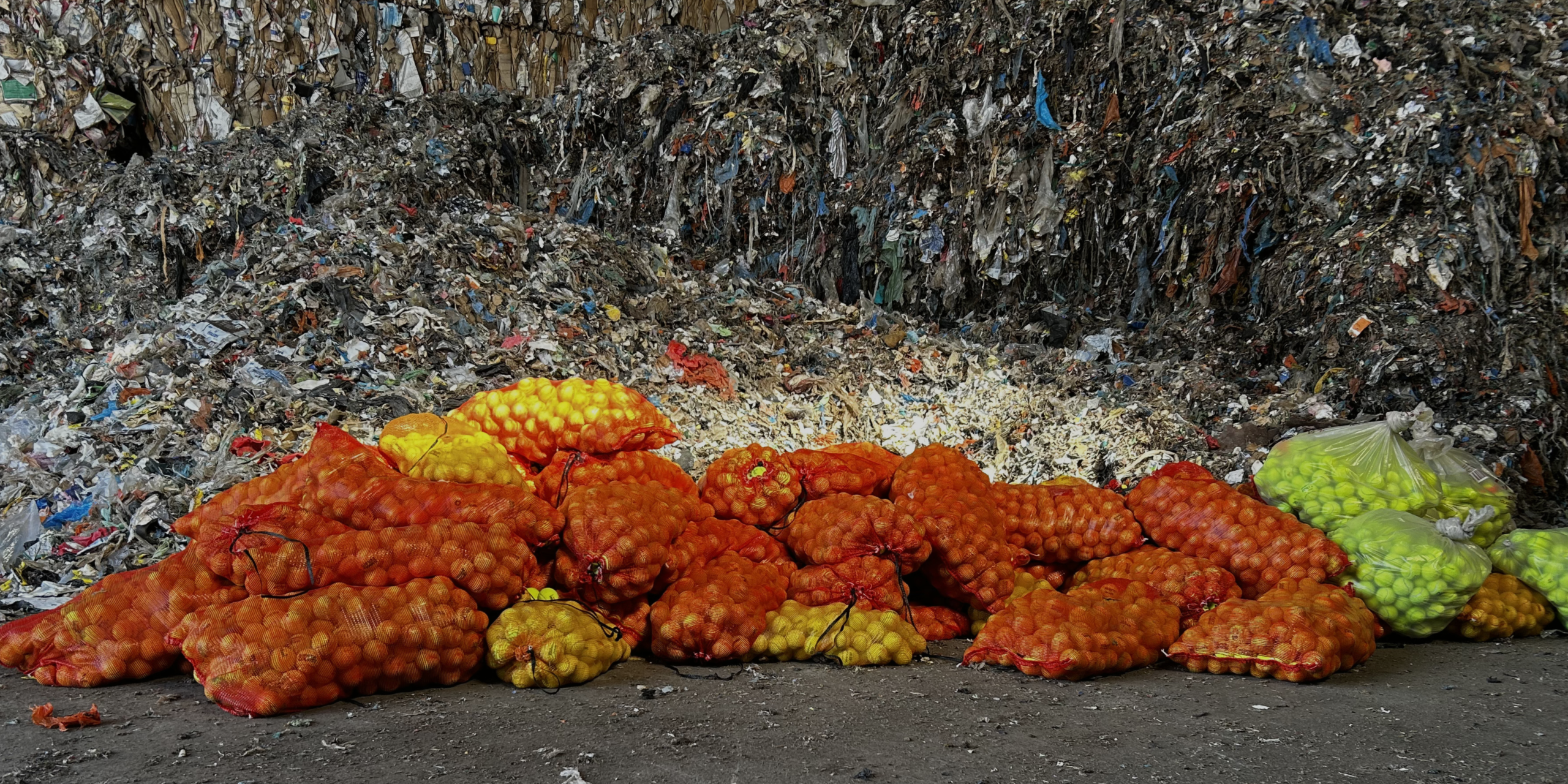
Approximately 400 million tennis and padel balls are produced worldwide every year. Most are discarded after just a few uses, ending up in mixed waste. Because of their multi-layered, pressurized structure, recycling used tennis and padel balls is challenging: only around 0.5% are recycled globally.
In Finland, around 330,000 people play tennis and padel, using an estimated 2.5 million balls every year. Just like elsewhere in the world, many of these balls end up in mixed waste or in nature.
Our Solution
G-Task and its partners have developed a solution for recycling used tennis and padel balls. Our goal is to establish a nationwide recycling system in Finland, where the materials from used balls can be recovered through chemical recycling and tennis and padel centers can improve their overall recycling rates. In the long term, we aim to expand the collection network across Europe.
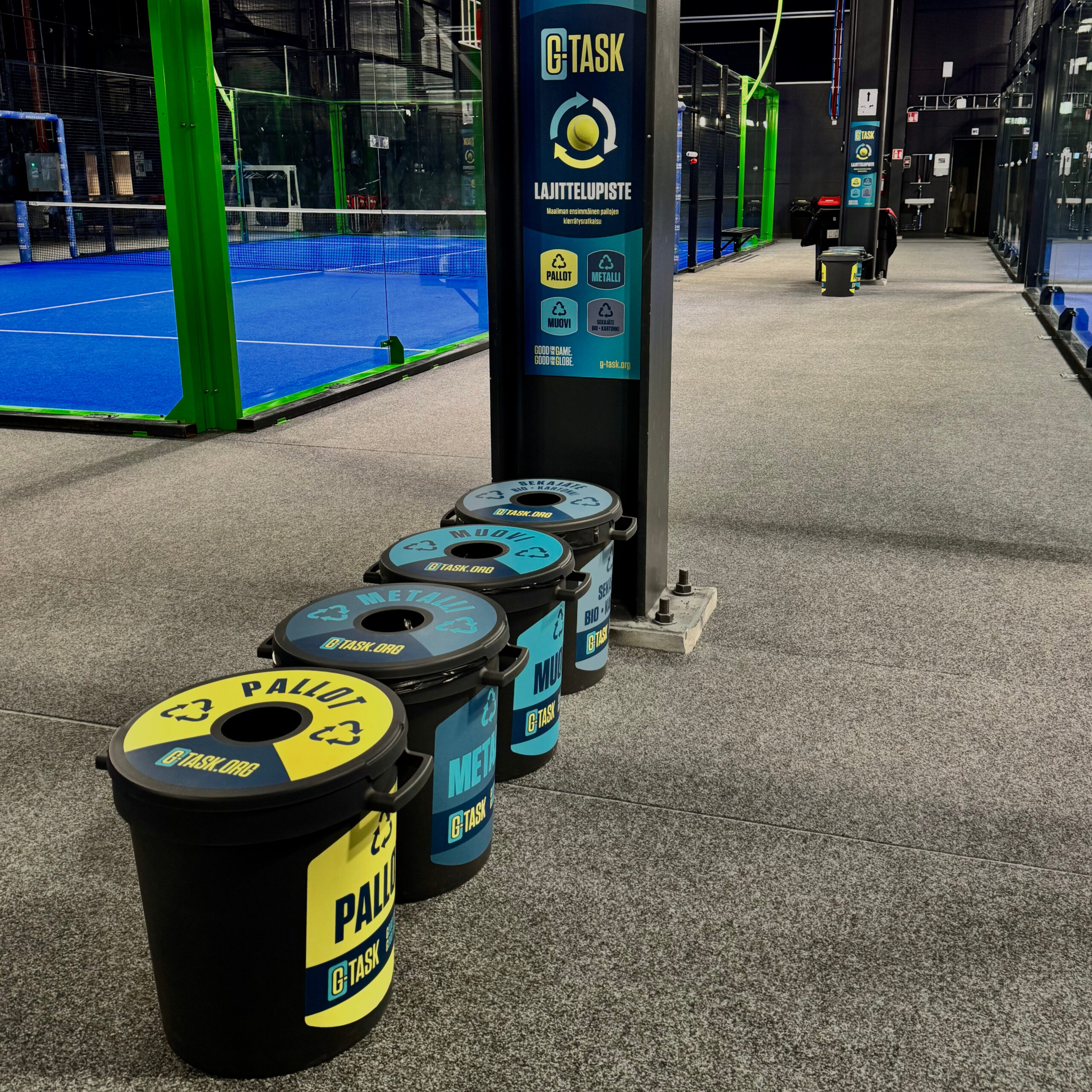
In the new recycling system, three lidded containers are placed alongside the courts. One container is dedicated for used balls, while the other two are for metal and plastic waste, such as the metal lids and plastic tubes used as packaging material for the balls. Plastic ball tubes and their lids are recycled through existing plastic and metal recycling channels.
Used balls are processed through an advanced chemical recycling process by our partner, Wastewise. Through pyrolysis, the balls are converted into a liquid oil product that can be used as a raw material for the plastics industry.
Our Impact
G-Task’s recycling system is designed to bring circularity to tennis and padel facilities.
Chemical recycling gives used tennis and padel balls a way back into the production cycle, turning waste into a valuable resource. The plastic produced through this process matches the quality of virgin plastic, making it suitable for a wide range of applications, even medical and food packaging.
The pyrolysis oil produced through the process serves as a raw material for the plastic and rubber industry. By replacing fossil-based raw materials, dependence on crude oil can be reduced and the environmental impact of tennis and padel ball production can be decreased.
By collecting not only used balls but also plastic and metal waste, the system is estimated to raise recycling rates in participating facilities to as high as 94.4%. Through raising awareness we also aim to encourage players to recycle more carefully at home.